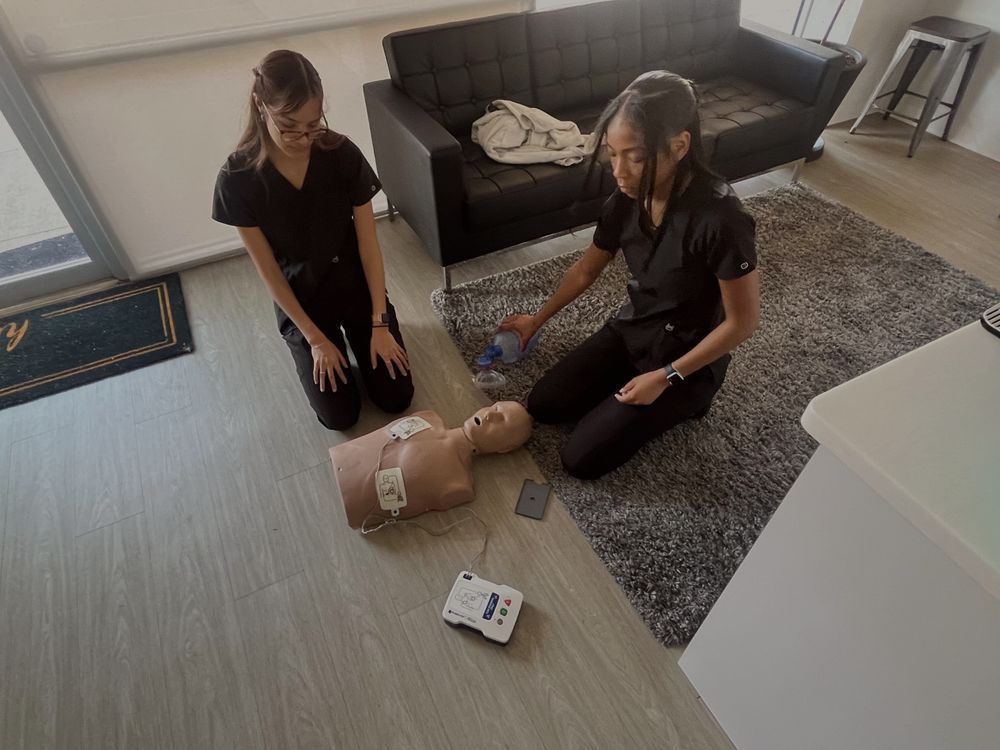
What Is a Medical Assistant? A Complete Guide for Laredo Students

If you’re considering a career change or looking for your first foothold in healthcare, understanding what a medical assistant is — and what the job actually involves day-to-day — is the right place to start.
Here’s a direct, complete answer to that question, along with what training looks like, what the work pays, and how to get started in Laredo.
What is a medical assistant?
A medical assistant is a healthcare professional who works in clinical settings — physician offices, urgent care clinics, specialty practices, and hospital outpatient departments — performing both clinical and administrative tasks. Medical assistants are not nurses or physicians, but they’re not just receptionists either. They’re the people who keep patient care moving.
On any given day, a medical assistant might:
- Take a patient’s vital signs and update their chart
- Draw blood and prepare specimens for the lab
- Administer an injection ordered by the provider
- Run a 12-lead EKG before a cardiology appointment
- Schedule a patient’s follow-up with a specialist
- Document a provider’s notes in the electronic health record
- Handle prior authorization for a medication
The job sits at the intersection of clinical work and patient care coordination — and it’s one of the most consistently in-demand positions in healthcare.
What does a medical assistant do? (Complete breakdown)
Clinical duties
Vital signs and patient intake
- Blood pressure, pulse, respiratory rate, temperature, and oxygen saturation
- Height, weight, and BMI calculation
- Reviewing and updating patient medical histories, medications, and allergies
- Documenting chief complaints before the provider enters the room
Phlebotomy
- Drawing blood from patients for laboratory testing
- Handling, labeling, and processing specimens correctly
- Managing patients who are anxious about needles or prone to fainting
Injections
- Administering subcutaneous, intramuscular, and intradermal injections under provider orders
- Vaccines, allergy shots, insulin, hormone therapy, TB skin tests
EKG/Electrocardiography
- Placing electrode leads and running 12-lead EKGs
- Transmitting results to the ordering provider
Point-of-care testing
- Urinalysis, blood glucose, rapid strep, influenza, pregnancy tests
- Following quality control procedures and documenting results
Clinical procedures
- Setting up procedure rooms and sterilizing instruments
- Assisting providers during exams and minor surgical procedures
- Wound care: dressing changes, suture and staple removal
- Applying splints, orthopedic supports, and dressings
Administrative duties
Medical assistants handle significant front-office and records work, especially in smaller practices:
- Scheduling — booking appointments, managing provider calendars, handling urgent same-day requests
- EHR documentation — entering patient data, treatment notes, and orders in systems like Epic, eClinicalWorks, and Athena
- Insurance — verifying patient coverage, processing prior authorizations, understanding basic billing codes
- Patient communication — phone triage, test result delivery, appointment reminders, care instructions
- HIPAA compliance — protecting patient privacy in all interactions and record-keeping
Where medical assistants work
Medical assistants are employed across a wide range of settings:
- Primary care offices — the most common work environment; general practice, family medicine, internal medicine
- Specialty clinics — cardiology, orthopedics, OB-GYN, dermatology, gastroenterology
- Urgent care centers — fast-paced, high-volume environments with a wide variety of presentations
- Federally Qualified Health Centers (FQHCs) — community health clinics serving underinsured populations
- Hospital outpatient departments — surgical prep, recovery support, outpatient procedure units
- Telehealth support roles — patient intake, documentation, and care coordination
What is a medical assistant’s salary?
According to the Bureau of Labor Statistics, the national median salary for medical assistants is approximately $42,000 per year (roughly $20 per hour). Salary ranges by experience and setting:
| Experience Level | Typical Annual Salary |
|---|---|
| Entry-level (0–1 year) | $33,000–$38,000 |
| Mid-level (2–4 years) | $38,000–$45,000 |
| Experienced (5+ years) | $45,000–$55,000+ |
| Specialty offices | Often higher than primary care |
Factors that increase pay: specialty practice type, CCMA or other certifications, expanded functions training, and geographic market.
What is the job outlook for medical assistants?
The Bureau of Labor Statistics projects 14% growth in medical assistant employment through 2032 — nearly double the national average for all occupations. This growth reflects:
- An aging U.S. population with increasing healthcare needs
- Expansion of outpatient and ambulatory care
- Greater reliance on medical assistants to handle routine clinical tasks, allowing providers to see more patients
- Growth in preventive care and chronic disease management
In practical terms: the demand for qualified medical assistants is strong and growing across nearly every healthcare market in the country.
What certification does a medical assistant need?
While certification requirements vary by state and employer, the Certified Clinical Medical Assistant (CCMA) credential — awarded by the National Healthcareer Association (NHA) — is one of the most widely recognized in the field. It tests clinical and administrative competency across the full scope of a medical assistant’s responsibilities.
Other common credentials include:
- CMA — Certified Medical Assistant (AAMA)
- RMA — Registered Medical Assistant (AMT)
Certification consistently improves hiring outcomes and starting pay — employers use it as a reliable signal of verified competency.
How long does it take to become a medical assistant?
A focused, career-oriented program like the one at Laredo Medical Assistant School takes 18 weeks — roughly four to five months. That includes clinical skills training, administrative training, externship in a real medical setting, and CCMA certification preparation.
Compare that to a 2-year community college program covering the same core competencies — and the difference is significant. An 18-week graduate enters the workforce 18 months earlier, with 18 more months of salary and experience before a 2-year graduate has finished their program.
Get started at Laredo Medical Assistant School
Laredo Medical Assistant School offers an 18-week medical assistant program in Laredo designed for students with no prior clinical experience. Hands-on training, externship placement in local medical offices, and CCMA certification prep are all included.
- See what the program covers: Program details
- Review tuition and payment options: Tuition
- Talk to our team: Contact us
- Apply today: How to apply
You're only a few months from the medical assistant career you deserve.